Stubbs: The Ginger Cat Who Was Honorary Mayor of an Alaskan Town for 20 Years

Stubbs served Talkeetna for 20 years. Photo courtesy of Lauri Stec via CNN.
In the small Alaskan community of Talkeetna, visitors once arrived with a very important question:
“Where’s the mayor?”
The answer was usually lounging at Nagley’s General Store, curled up on a counter, or drinking water from a wine glass.
His name was Stubbs. He was a ginger cat, a resident store cat, a world-famous tourist attraction, and, for about two decades, Talkeetna’s honorary “mayor.”
Stubbs was born in 1997 and died on July 21, 2017, at around 20 years old. During his long career, he greeted visitors, posed for photographs, received fan mail, survived a serious dog attack, and became one of the best-known celebrity pets in the world.
His story is funny, heartwarming, and slightly less political than many headlines suggested.
A kitten at Nagley’s General Store
Stubbs’ story began at Nagley’s General Store on Main Street in Talkeetna. According to accounts from National Geographic and the Anchorage Daily News, a group of kittens had been left near the store. Lauri Stec and her family adopted Stubbs, and the short-tailed kitten soon made the shop his home.
His name came from his little tail. Stubbs was a Manx mix, and he did not have much of a tail to speak of.
Nagley’s was a perfect place for a cat with a curious personality. Founded in 1921, the store was already an important part of Talkeetna’s historic downtown. It sold food, drinks, souvenirs, and supplies to locals, travelers, climbers, and visitors heading toward Denali.
Stubbs added something no ordinary store could offer: a friendly orange cat who might wander in, settle at the counter, and accept attention from strangers.
Before long, locals began calling him the mayor.
Nobody seems to have planned a formal political career. The town simply embraced the joke, and Stubbs embraced the attention.

Stubbs became a familiar sight around Talkeetna and at Nagley’s General Store.
What did Mayor Stubbs actually do?
Stubbs’ mayoral duties were refreshingly simple.
He greeted visitors at the store. He sat on the counter. He allowed tourists to take photographs. He wandered around town, visited nearby businesses, and occasionally accepted snacks from admirers.
He was also known for drinking water, and sometimes water mixed with catnip, from a wine glass. It was a very dignified arrangement for a cat who had no interest in paperwork.
Visitors came from all over the world hoping to meet him. Some asked for an appointment. Others simply wanted a photograph with the famous feline. The Spone family, who later owned Nagley’s, said that more than 75 percent of visitors asked where the mayor was during their first year running the store.
Stubbs became a postcard subject, a social media personality, and a regular feature in news stories about unusual leaders. Talkeetna’s tourism reportedly grew in part because people wanted to visit the quirky Alaskan community and meet its cat mayor.
That made Stubbs one of those rare celebrity pets who became part of a place’s identity. He was not just famous in Talkeetna. To many visitors, he was Talkeetna.
Myth vs. true story: Was Stubbs really elected?
Here is the important myth-buster:
The honorary title was real. The official election was not.
The widely repeated story says that Stubbs won a write-in vote in 1997 after local residents became unhappy with the human candidates. Major outlets repeated versions of this story, which helped make the tale famous.
But local reporting later clarified what really happened.
Talkeetna is an unincorporated community in the Matanuska-Susitna Borough. It has never had its own municipal elections or an official mayoral office. A community council advises the borough, but there was no legal mayoral election for Stubbs to win.
As the Anchorage Daily News reported, there was no write-in campaign and no official mayor: human, feline, or otherwise.
Instead, “Mayor Stubbs” was an informal and honorary title given to him by locals and the store. The story grew over time, helped along by media coverage and the town’s good sense of humor.
So Stubbs was not an elected government official. He was something more charming: a beloved community mascot who became an honorary leader because people enjoyed having him around.
And honestly, his campaign platform was probably stronger than most. He promised naps, cuddles, and absolutely no unnecessary meetings.
The orange tabby advantage
Stubbs was reported to be male, which fits one of the most interesting bits of cat genetics.
About 80 percent of orange tabby cats are male. That does not mean all ginger cats are boys (orange females certainly exist) but the colour is linked to the X chromosome.
Male cats usually have one X chromosome and one Y chromosome. If their single X chromosome carries the orange colour gene, they can be orange. Female cats usually have two X chromosomes, so they generally need the orange gene on both to be solid orange.
That is why orange boys are much more common than orange girls.
This is one of many amazing animal facts that makes cats even more fascinating. Another is that a cat’s whiskers are not just decorative. They are deeply rooted sensory hairs surrounded by nerves, helping cats detect nearby objects, air movement, and the size of tight spaces.
Stubbs probably did not need whiskers to understand that a store counter was the best place in town. But they would have helped him navigate his busy little kingdom.
A serious attack, and a community that rallied
In late August 2013, Stubbs was attacked by a dog while walking near Nagley’s General Store.
He suffered severe injuries, including a punctured lung, a fractured or crushed sternum, bruised hips, and deep wounds. After the attack, he managed to hide beneath an old home nearby. Lauri Stec and other residents searched for him in the rain before finding him and rushing him to veterinary care.
The local community immediately rallied around him.
A local veterinarian treated Stubbs before he was transported to a veterinary hospital near Wasilla. His medical bills grew quickly, but donations began arriving. People from around the world sent money, cards, letters, and get-well messages.
His recovery was slow, but Stubbs pulled through. He eventually returned to Nagley’s and resumed his familiar place at the store.

Stubbs recovered from serious injuries after the attack. Photo provided by Lauri Stec and published by CBS News/AP.
The incident showed just how much affection people had for him. He may have been a celebrity cat, but he was also a real animal with a real family and a community that cared deeply about his well-being.
Retirement, naps, and a quieter life
By 2014, the family began discussing the possibility of Stubbs’ retirement. Summer brought crowds of tourists to Talkeetna, and the attention could be tiring for an older cat.
Stubbs had earned the right to slow down.
He was eventually given a reduced schedule. Instead of greeting visitors all day, he spent more time napping inside the store or relaxing at home. Even in his later years, he occasionally appeared at the counter or sat at the nearby West Rib Pub with his familiar glass of water.
This made sense for another reason: cats often feel safest in familiar places with predictable routines. A cat’s territory is more than a physical space. It includes familiar smells, sounds, people, resting spots, and daily habits.
Nagley’s was Stubbs’ territory for nearly his entire life. It was where he knew the layout, recognized the people, and understood exactly where the best counter perch could be found.
For a cat, that kind of stability matters.
The end of a remarkable 20-year reign
Stubbs died peacefully at about 20 years old on July 21, 2017.
News of his death was reported by CNN, the Associated Press, CBS, and the Anchorage Daily News. For a cat who had spent his life greeting tourists in a small Alaskan community, his passing became international news.
The town held a memorial, and the family began assembling photographs and memories for visitors at Nagley’s. Fans were invited to send cards and letters, just as they had during his recovery from the dog attack.
Stubbs left behind other cats, including Aurora and a kitten named Denali. Denali was suggested as a possible successor because of his friendly personality and willingness to be carried around like a baby.
The honorary mayor tradition continued informally. Nagley’s current store website identifies Aurora as the cat who took over the role after Stubbs.
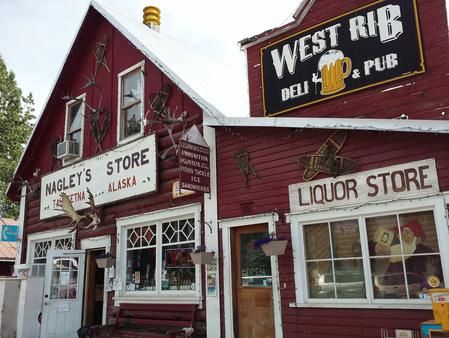
Today, Nagley’s remains connected to Talkeetna’s cat-mayor tradition.
Stubbs’ lasting legacy
A bronze statue of Stubbs stands in downtown Talkeetna, giving visitors another chance to meet the town’s most famous feline, even though the original mayor is no longer there to greet them.
His legacy reaches beyond one store or one Alaskan community. Stubbs belongs among the famous animals in history who became symbols of the places they called home.
He also helped show how quickly an ordinary pet can become extraordinary. Stubbs was not trained for television, elected to office, or raised to be famous. He was simply a friendly ginger cat who found a good home, enjoyed attention, and happened to live in a town willing to play along with a wonderful joke.
For 20 years, he offered visitors the same basic service: a warm welcome, a quiet nap, and perhaps a sip from a wine glass.
That may not be how governments work, but it is a very good way to become unforgettable.
Learn more
Comments