Seabiscuit: The Underdog Racehorse Who Lifted a Nation’s Spirits

Some animals become famous because of a single extraordinary moment. Others earn their place in history through years of struggle, setbacks, and second chances.
Seabiscuit belongs in both groups.
He was a small, awkward-looking Thoroughbred who seemed unremarkable early in life. He lost often, developed a reputation for being lazy, and was passed over by people who thought they knew what a champion should look like. Then, with the help of trainer Tom Smith, owner Charles S. Howard, and jockey John “Red” Pollard, Seabiscuit became one of the most beloved racehorses in American history.
His story reached its peak in 1938, when he defeated War Admiral in a nationally watched match race. But the real heart of Seabiscuit’s story is not just that he won. It is that he changed after people finally gave him the chance to be understood.
A Horse Nobody Expected to Become a Star
Seabiscuit was foaled in Kentucky in 1933. He was bred from a respected bloodline: his sire, Hard Tack, was a son of the great Man o’ War. Even so, Seabiscuit did not look like a future superstar.
He was small for a top-level racehorse, with a thick body, short legs, and an unusual running style. Some observers described his stride as awkward. His early racing record did little to improve his reputation. As a two-year-old, he raced 35 times and won only five of those starts.
He was not hopeless, but he was often treated as though he had already shown the best he had to offer. Trainers considered him difficult. Riders pushed him hard. He raced frequently, sometimes with little time to rest, and he became nervous and unhappy.
The popular version of the story sometimes calls Seabiscuit a complete nobody. That is not quite accurate. He was well-bred, and he had shown flashes of ability. The documented history is more interesting: he was a talented but badly managed horse whose potential had not yet been matched with the right people.

Tom Smith Saw Something Others Missed
The turning point came in 1936, when Seabiscuit caught the attention of trainer Tom “Silent Tom” Smith.
Smith had a reputation for understanding horses that other people had given up on. He did not believe every problem could be solved by pushing harder. Instead, he watched closely. He paid attention to a horse’s habits, fears, energy, and body language.
Smith saw strength in Seabiscuit. He also saw a horse who needed rest, comfort, and confidence.
That approach was very different from the treatment Seabiscuit had received earlier. Smith allowed him time to settle. He improved his feed and routine. He gave him a larger stall and introduced him to a calm companion horse named Pumpkin. A stray dog and a spider monkey were also reportedly part of the unusual stable household.
The details of Seabiscuit’s animal companions have become part of the story’s charm, but the larger point is well documented: Smith gave the horse a calmer environment. Seabiscuit began eating better, relaxing, and responding to training.
This is one of the most heartwarming amazing animal facts in his story. Seabiscuit did not simply become faster. He became happier and more willing to trust the people around him.
Charles Howard Took a Chance
Smith needed an owner willing to invest in his plan, and he found one in Charles S. Howard.
Howard was a successful California automobile businessman who wanted to build a major racing operation on the West Coast. In 1936, he purchased Seabiscuit after the horse won races at Saratoga. The price is often reported as roughly $8,000: a modest amount compared with what Seabiscuit would later earn.
Howard was not simply buying a proven champion. He was taking a chance on a horse who still had something to prove.
Under Howard’s ownership and Smith’s training, Seabiscuit began winning races across different distances and at different tracks. He became especially successful in handicap races, events in which horses carry different weights to create a more even competition.
By 1937, Seabiscuit was no longer an overlooked horse. He won major races including the San Juan Capistrano Handicap, Bay Meadows Handicap, Brooklyn Handicap, Butler Handicap, Massachusetts Handicap, and Riggs Handicap. He set track records and earned more money than any other horse in the United States that year.
His success also made him a national celebrity.
Red Pollard and the Partnership That Changed Everything
Jockey John “Red” Pollard became one of the most important people in Seabiscuit’s life.
Pollard was a talented but frequently overlooked rider. He had experienced serious injuries and had limited vision in one eye. Like Seabiscuit, he was often judged by his difficulties rather than his ability.
The two formed a remarkable partnership.
Pollard understood that Seabiscuit responded best when he could settle into a race and then make a powerful late move. He also learned how to keep the horse focused without frightening or exhausting him. Their relationship was based on more than skill. It was built on patience and trust.
Pollard rode Seabiscuit in many of his most important victories. Together, they became part of the horse’s growing identity as an outsider who kept proving people wrong.
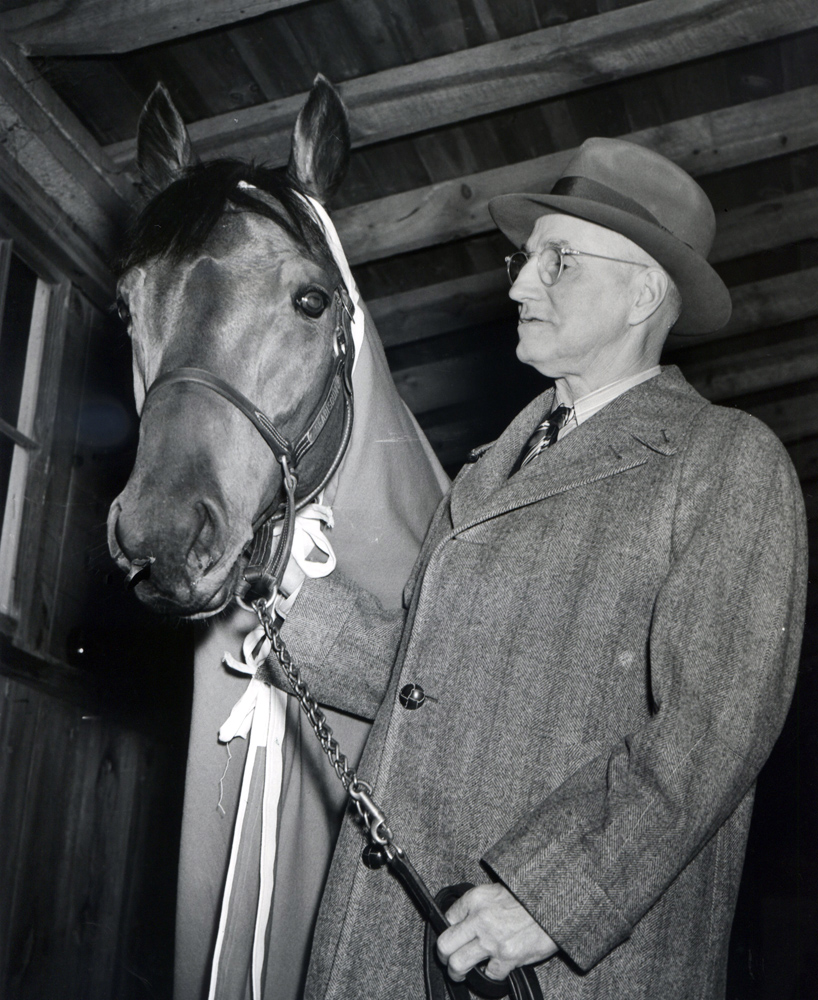
The Race Everyone Wanted to See
By 1938, one opponent stood above the rest: War Admiral.
War Admiral was the polished champion of the East Coast. He was a son of Man o’ War, won the 1937 Triple Crown, and was widely considered one of the fastest horses in the country.
Seabiscuit represented a very different kind of champion. He was older, smaller, and known mainly for winning tough handicap races. The public saw the matchup as more than a competition between two horses. It felt like a showdown between the established champion and the determined outsider.
An earlier meeting was discussed but never happened. Bad weather and track conditions interfered with the planned 1937 Washington Handicap. Another proposed race in 1938 was canceled when Seabiscuit was not fit to compete.
Finally, the match was set for November 1, 1938, at Pimlico Race Course in Baltimore.
The race was called the Pimlico Special, but newspapers and fans gave it a grander name: the “Match of the Century.”
Seabiscuit vs. War Admiral
War Admiral was heavily favored. His style was to break quickly, take control, and maintain his speed. Seabiscuit usually raced differently. He often stayed behind the leaders before charging forward near the finish.
There was one major complication: Red Pollard was injured and could not ride.
George Woolf took his place aboard Seabiscuit. Smith and Woolf prepared the horse for a different kind of race. Instead of waiting until the final stretch, Seabiscuit would try to break quickly and take the early lead.
On the third attempt to start, Seabiscuit sprang forward.
War Admiral gradually closed the gap, and for part of the race the two horses ran almost side by side. Woolf allowed War Admiral to come close, giving Seabiscuit a clear look at his rival.
Then Seabiscuit responded.
About 200 yards from the finish, he pulled away. He crossed the line four lengths ahead of War Admiral and set a track record for the distance. Around 40,000 people watched from Pimlico, while millions more listened on the radio.
The result was fully documented. Some colorful details repeated in books and films: especially exact conversations and dramatic private moments: belong more to storytelling than to the official race record. But the central facts are not legend: Seabiscuit defeated the Triple Crown winner by four lengths in a record-setting performance.
He was named Horse of the Year.

A Comeback Nobody Expected
After his famous victory, Seabiscuit suffered a serious leg injury in late 1938. Many people assumed his racing career was over.
He did not race in 1939 until making one unsuccessful start, after which he was expected to retire. But Charles Howard did not rush him. Seabiscuit returned to California, where he was given time to recover.
Red Pollard was recovering too. He had suffered a devastating leg injury, and his future as a jockey was uncertain. During their long recovery, Pollard and Seabiscuit became symbols of one another’s determination.
In 1940, Seabiscuit returned to racing. He won the San Antonio Handicap in track-record time and then entered the Santa Anita Handicap: the race he had lost twice by a nose.
This time, Pollard was back in the saddle.
Seabiscuit faced trouble during the race, but a gap opened in the final stretch. He accelerated through it, passed the field, and defeated stablemate Kayak II by one and a half lengths. He set another track record.
It was Seabiscuit’s final race, and it gave his story a perfect closing chapter: the horse who had once been dismissed finally won the race that had haunted him.
Why Seabiscuit Mattered During the Great Depression
Seabiscuit became famous during one of the hardest periods in American history. The Great Depression had left millions of people facing unemployment, poverty, and uncertainty.
His races offered a reason to hope and celebrate.
People connected with Seabiscuit because he did not seem perfect. He was not the biggest horse, the most elegant horse, or the obvious choice to win. His success suggested that a difficult beginning did not have to determine the rest of a life.
That is why Seabiscuit remains one of the most memorable famous animals in history. His story was not only about speed. It was about being underestimated, finding the right support, and getting another chance.
Today, we often celebrate celebrity pets for their charm, unusual talents, or internet fame. Seabiscuit belonged to an earlier kind of animal celebrity, when newspapers and radio carried his story into homes across the country. His fans did not just admire a racehorse. They saw something of themselves in him.
Seabiscuit’s Enduring Legacy
Seabiscuit retired to Ridgewood Ranch in California, where he lived until his death from a heart attack on May 17, 1947. He was 14 years old.
His final career record was 33 wins from 89 starts, with earnings of $437,730: a record for an American Thoroughbred at the time. He was inducted into the National Museum of Racing and Hall of Fame in 1958.
His life later inspired Laura Hillenbrand’s bestselling book Seabiscuit: An American Legend and the 2003 film Seabiscuit. Those retellings helped introduce his story to new generations, though, as with any dramatized history, some scenes and dialogue were shaped for storytelling.
The essential truth is more than enough: Seabiscuit was a talented horse who needed patience, understanding, and the right team. Tom Smith recognized his potential. Charles Howard gave him a chance. Red Pollard trusted him. And Seabiscuit answered with some of the greatest performances in racing history.
That may be the reason his story still feels so warm after all these years. Seabiscuit did not begin as a champion. He became one: and reminded a nation that sometimes the overlooked ones have the biggest hearts.
For further reading, see the National Museum of Racing and Hall of Fame’s Seabiscuit biography, PBS American Experience’s history of Seabiscuit, and Encyclopaedia Britannica’s overview.
Comments