Lonesome George: The Last Giant Tortoise of Pinta Island and the Legacy He Left Behind

Some animals become famous because they save lives, win races, or stay loyal to a person. Others become famous because their story makes the whole world stop and pay attention.
Lonesome George was one of those animals.
He was the last known Pinta Island giant tortoise, a member of the Galápagos lineage Chelonoidis abingdonii. For more than 40 years, he lived under the care of conservationists on Santa Cruz Island. He was a little cranky, very solitary, surprisingly charming, and watched by people around the world.
He was also a heartbreaking reminder that extinction is permanent.
Life on Pinta Island
Lonesome George was probably born around 1910 or 1911 on Pinta Island, one of the northern islands in the Galápagos archipelago. At the time, Pinta still had the dry volcanic landscape, shrubs, grasses, and native plants that had supported its giant tortoises for thousands of years.
The Galápagos Islands were central to Charles Darwin’s thinking about evolution. The islands’ animals had adapted in different ways to their separate environments, and giant tortoises were among the clearest examples. Some tortoises had dome-shaped shells. Others, including the Pinta tortoise, had a higher “saddleback” shell that helped them stretch their long necks toward taller vegetation.
But life on Pinta became increasingly difficult.
Whalers and fur sealers hunted the island’s tortoises in the 1800s. Pinta was the first landfall for ships arriving in the Galápagos and the last island they passed when leaving, making it an easy place to stop for fresh food. Giant tortoises could survive for long periods without food or water, so ships sometimes carried them alive as a supply of meat.
Goats caused even more damage. Fishermen released goats on Pinta in 1959, and the population grew to roughly 40,000 by 1970. The goats ate the plants the tortoises needed and destroyed much of the remaining habitat. Pinta was eventually declared goat-free through Project Isabela, but by then the island had already lost its native tortoise population.
Or so people thought.
The discovery of the last Pinta tortoise
The Pinta tortoise was believed to have gone extinct by the early 20th century. Then, on 1 November 1971, Hungarian malacologist József Vágvölgyi found a single tortoise while studying snails on the island.
That tortoise was a male. He was the only one left.
The discovery was astonishing. Conservationists searched Pinta for a female and even searched zoos and private collections around the world for another Pinta tortoise. A reward was offered for information that could lead to a mate. Despite years of searching and genetic testing, no pure Pinta female was ever found.
In spring 1972, the tortoise was moved to the Tortoise Breeding and Rearing Center in Puerto Ayora on Santa Cruz Island. The center was connected with the Charles Darwin Research Station and the Galápagos National Park conservation program.
His caretaker was ranger Fausto Llerena, who would look after him for the rest of his life.

Fausto Llerena cared for Lonesome George for four decades. Photo via the Charles Darwin Foundation.
How did he get the name “Lonesome George”?
His scientific identity was impressive, but his public name came from American television.
The American media named him after George Gobel, a popular comedian who was nicknamed “Lonesome George.” The name stuck, and soon the tortoise became one of the most recognizable animals in the world.
He was never a pet in the usual sense. Still, he became part of a global family of beloved animals. Alongside famous animals in history and celebrity pets, George showed how deeply people can care about an individual animal they have never met.
He even had a personality to match his name. George was solitary and sometimes described as a bit cranky. He was not especially interested in being rushed into romance, either. He enjoyed his routine, his private corral, and his watering hole. At one point in the late 1980s, he became overweight and was placed on a diet.
For all his fame, his days were mostly quiet: eating, resting, drinking, and slowly exploring his enclosure.
The search for a mate
The conservation team tried almost everything reasonable to prevent the Pinta lineage from disappearing.
In 1992, two female tortoises from Wolf Volcano on Isabela Island were brought in because they were considered among George’s closest living relatives. George did not produce viable offspring with them.
Later, two Española tortoises were introduced. Española tortoises were genetically more similar to George than the Wolf Volcano females in some important ways. Eggs were laid, and the world waited hopefully. Unfortunately, every egg was inviable.
There were also attempts at artificial insemination and other reproductive research. But no hatchling was ever produced.
The problem was not simply that George was old or uninterested. A pure Pinta female was never found, and the genetic distance between George and the available females was too great to create a living replacement for his lineage.
That made George’s corral both a place of hope and a place of pressure. Every egg was examined. Every search expedition mattered. He was a gentle-looking tortoise carrying the future of an entire branch of life on his shell.
A small genetic hope
Although no pure Pinta tortoise was found, genetic research offered a narrow path forward.
Scientists, including researchers connected with Yale University, studied tortoises on Wolf Volcano and discovered that some had partial Pinta ancestry. Humans had moved tortoises between Galápagos islands in the past, especially during the whaling era. Over generations, some of those animals interbred.
These tortoises are not Lonesome George, and they cannot bring back the original Pinta lineage exactly. But they may carry enough Pinta genetic material to help restore some of the ecological role once played by Pinta tortoises.
That work is part of a much larger effort to restore giant tortoise populations across the Galápagos. Tortoises are not just large reptiles. They are ecosystem engineers. As they walk, graze, trample plants, open trails, and spread seeds, they help shape the habitats around them.
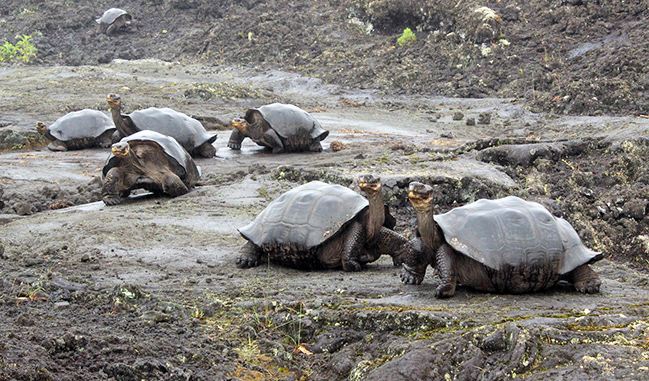
Genetic research on Wolf Volcano tortoises has helped guide restoration planning. Photo by James Gibbs/Galápagos Conservancy.
George’s final day
On 24 June 2012, Fausto Llerena found Lonesome George dead in his corral.
He was estimated to be 101 or 102 years old. A necropsy found no sign of a major illness or injury. His death was attributed to natural causes, with cardiac arrest suspected.
The news travelled around the world. People who had followed George’s life mourned the loss of an animal they knew through photographs, documentaries, and conservation reports.
His death also marked the official extinction of the pure Pinta Island tortoise. There was no other confirmed member of the lineage left.
It was a sad ending, but George’s story had already changed the way many people understood extinction. He was not an abstract statistic. He was one individual tortoise with a name, a routine, a caretaker, and a recognizable face.
The afterlife of a conservation icon
After George died, his body was carefully preserved. The American Museum of Natural History in New York displayed his taxidermied body from 2014 into early 2015. The mount was created with scientific care, including details of his body and posture.
George was later returned to Ecuador. Today, he is displayed at the Galápagos National Park headquarters and tortoise interpretation center on Santa Cruz Island, near the place where he spent his final decades.
Outside his former enclosure, a message captures the meaning of his life:
“Whatever happens to this single animal, let him always remind us that the fate of all living things on Earth is in human hands.”
That sentence is difficult to read without thinking about how George’s story began. People hunted the tortoises. People introduced goats. People changed the island. And people later worked for decades to protect the one tortoise who remained.
The same species caused the damage and led the rescue effort.
What comes next for Pinta?
Pinta is not being forgotten.
In 2010, conservationists released 39 sterilized hybrid tortoises onto the island. They were not intended to recreate the Pinta tortoise genetically. Instead, they served as temporary ecosystem engineers, helping to graze vegetation, maintain open trails, and restore natural processes after the goats were removed.
Project Pinta restoration work is still ongoing. A recent study explored whether tortoises with Floreana ancestry could eventually be introduced to Pinta as ecological replacements. The idea is complicated because conservationists are also trying to restore tortoises on Floreana Island, so limited animals and resources must be carefully shared.
The goal is not to pretend that Lonesome George can be replaced. He cannot.
The goal is to help Pinta become a living island again.
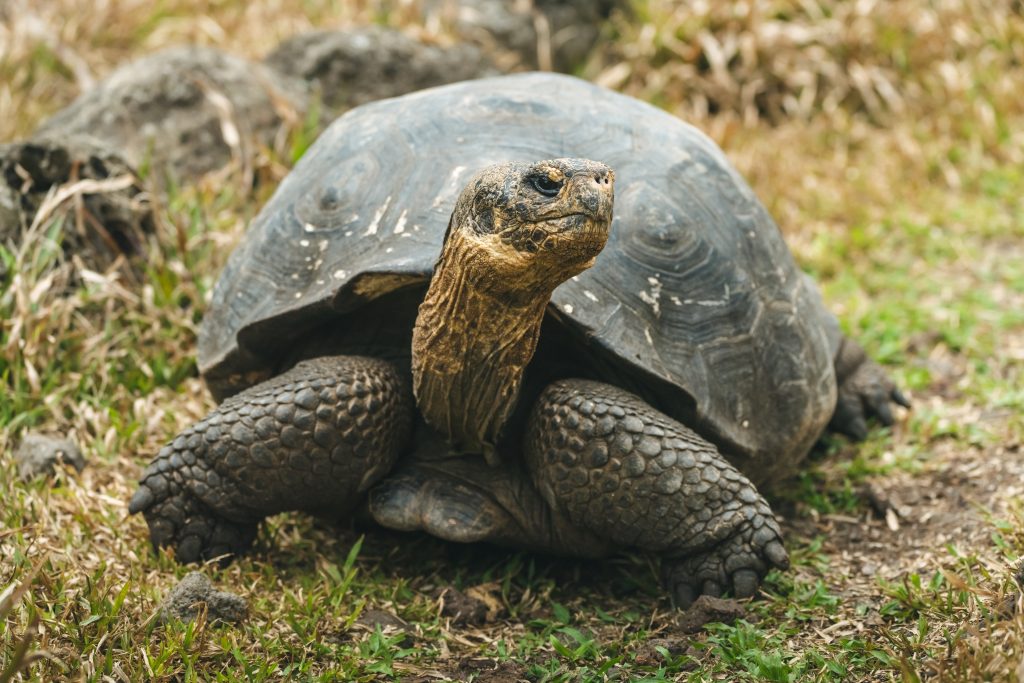
Modern restoration research is exploring how giant tortoises can help repair damaged island ecosystems. Read the latest Pinta ecosystem research.
The lesson Lonesome George left behind
Lonesome George was the rarest creature on Earth, but his importance was never only about rarity.
He showed us that conservation is personal. One animal can represent an entire species, an island, and a warning about what happens when human actions are not carefully considered.
He was a slow-moving, long-lived, slightly grumpy celebrity. He loved his watering hole, followed his daily routine, and never became a father. Yet his life inspired research, public attention, habitat restoration, and new hope for the Galápagos.
That makes him one of the most unforgettable animals in our Detailed Stories About Famous Pets series.
If you enjoy amazing animal facts, famous animals in history, and stories about remarkable creatures, follow along for the next installment. And whenever you see a conservation story, remember George: protecting wildlife is not only about saving a population. Sometimes, it begins with making sure one animal is not left alone.
Comments